
Dilpreet Singh is the founder of Throne Roofing, a roofing company based in Calgary, Alberta, Canada, serving homeowners across Calgary, Edmonton and Saskatchewan. The guides on this site focus on what matters for Canadian prairie roofs: snow load, ice dams, freeze-thaw cycles and the details that keep water out. Questions or corrections: support@throneroofing.online
If you typed “thornes roofing & contracting” into Google, you’ve probably noticed something odd. The results show several different companies, in different countries, with similar names and very different services. That’s not a glitch. Thorne is both a surname and a place name, and roofers like to use both.
Short answer: Thornes Roofing & Contracting is a name that several unrelated roofing businesses use or resemble, including a Facebook business page, a family roofer in North Carolina’s Triangle region, and a Surrey, BC contractor with a similar name. Before you book anything, confirm the exact company, its registration, insurance and recent reviews.
This guide helps you do that. It covers how to tell the similarly named companies apart, how to read photos, websites and reviews, what a proper roof assessment looks like, how flat roofing differs from shingles, and what to check if you’re hiring in Canada. Some of it is about the name. Most of it is about avoiding a bad roofing job, which is the real reason people search for a contractor by name.
Intro: Who Is Thornes Roofing & Contracting?
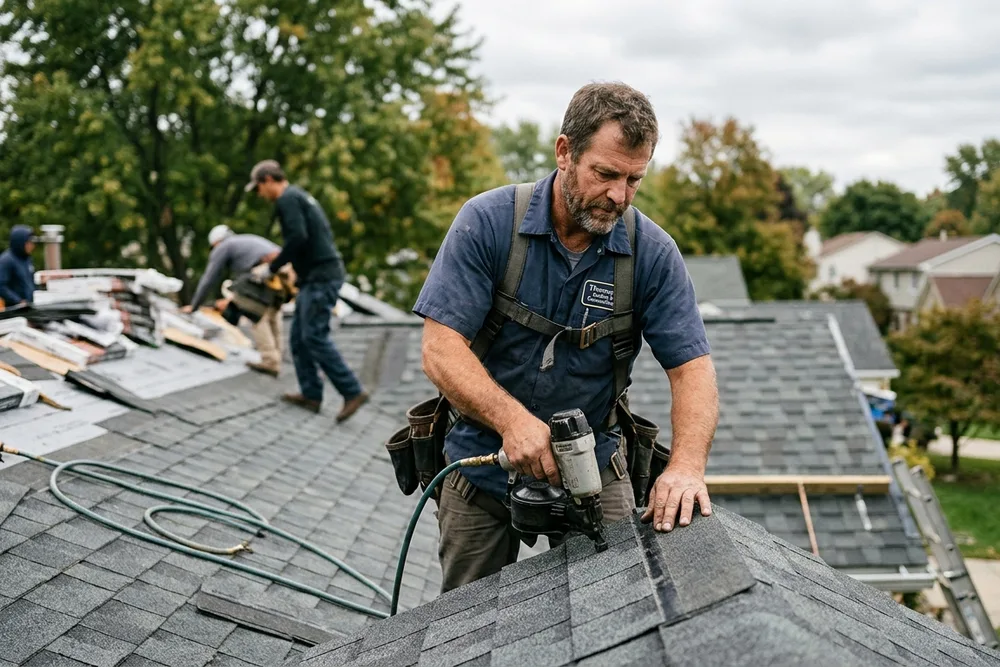
Here’s the honest picture. Searching for the name brings up a mix of results: a Facebook page titled “Thorne’s Roofing Contracting,” a family-run roofer in the Triangle area of North Carolina, a Surrey, BC contractor, and roofers in the town of Thorne near Doncaster in the UK. These are not one business with several branches. They appear to be separate operations that share a word.
That matters because a roofing decision involves a lot of money, a long warranty period and a lot of weather. Hiring the wrong “Thorne” because the search results blurred together is an avoidable mistake. A company in North Carolina can’t repair your leaking roof in Surrey, and a UK tradesman in Doncaster won’t be covered by your provincial workers’ compensation board.
So the first job is identification. Write down the phone number, the business address, the website domain and any registration details from the exact page that caught your eye. Everything else in this guide builds on that.
The Thorne roofers you’re likely to find
The table below separates the main results. It reflects what appears in search results and on the businesses’ own pages. I haven’t verified licences or insurance for any of them, and you shouldn’t assume they’re connected.
| Name in search results | Where it appears to operate | What it says it does | Worth knowing |
|---|---|---|---|
| Thorne’s Roofing Contracting (Facebook page) | Not clearly stated in the listing | Roofing and contracting work | Social pages vary a lot in detail. Check for an address, phone number and recent posts. |
| Thorne Roofing Company, LLC | Triangle area, North Carolina | Flat roofs, metal, asphalt shingles, repairs, skylights, residential and commercial | Describes itself as a family company, with “quality roofing since 1990” on its site. |
| TNS Contracting | Surrey, White Rock, Delta, Langley, BC | Leak repair, replacements, strata reroofing | Different name, but it ranks for the same search. Its site stresses that assessments are done by a roofer, not a salesperson. |
| Roofers in Thorne, Doncaster | South Yorkshire, UK | Local roofing repairs | “Thorne” here is the town, not a company name. |
If you’re in Canada, only one of these rows even claims to serve a Canadian market. That’s the first filter, and it already narrows things considerably.
What the suffixes mean: LLC, Inc, Ltd, Co
People often search with a legal suffix attached: thornes roofing contracting llc, thornes roofing contracting inc, thornes roofing contracting ltd, thornes roofing contracting co. Each suffix points to a different place.
LLC is a US structure (limited liability company). Inc can be American or Canadian. Ltd is common in Canada, the UK and other Commonwealth countries. Co is a loose abbreviation for “company” and doesn’t tell you much by itself.
In Canada, a roofer operating as a corporation will usually be “Ltd.”, “Inc.” or “Corp.” and registered either federally or provincially. A sole proprietor may operate under a registered business name with no suffix at all. That’s legal, but it also means personal liability and sometimes thinner insurance, so it’s worth asking about.
Some searchers add “chicago” (thornes roofing contracting chicago). I couldn’t tie any of the businesses above to Chicago, so treat that search as a dead end unless you find a specific listing with an address. A suffix or city you find in a search result is a clue, not proof. Proof is the provincial or state registry entry.
Photos: What a Roofer’s Project Photos Can and Can’t Tell You
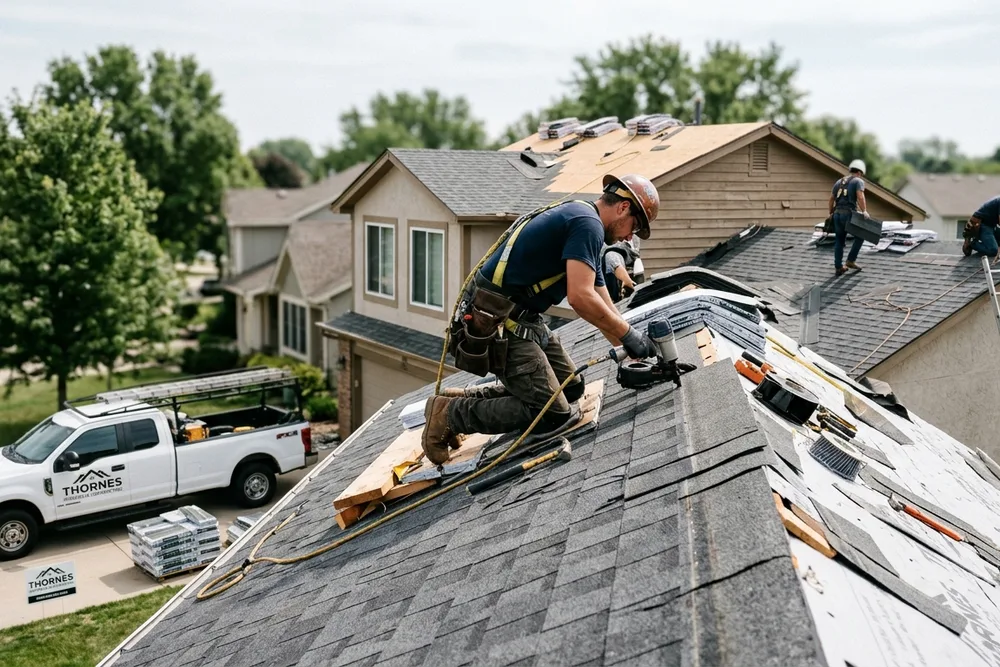
The Facebook listing for Thorne’s Roofing Contracting leads with an “Intro” and “Photos” structure, which is how most small contractors present themselves. Photos are useful, but they’re also the easiest thing to fake or misread. Here’s how to get real information out of them.
Look for the boring angles. A single drone shot of a finished roof tells you almost nothing. You want close-ups of flashing at chimneys and walls, valleys, vent penetrations, eaves and ridges. These are where leaks start, and they’re where sloppy work hides.
Look for before-and-after sets from the same angle. If the “before” photo shows rotten decking and the “after” photo shows new plywood, that’s a roofer who deals with problems rather than covering them. If every photo is a clean finished roof under a blue sky, ask why.
Check the shingle lines and ridge caps. Straight courses, even exposure and tidy ridge caps suggest a crew that cares. Wavy lines, exposed nails and patchy sealant are warning signs, even in a photo.
Ask about dates and locations. Reasonable questions are “When was this roof done?” and “Can I drive past it?” A proud roofer will happily give you two or three addresses. A hesitant one may be using stock images or another company’s work.
Run a reverse image search. If you right-click a photo and search for it, you can see whether it appears on other contractors’ pages. It takes ten seconds and has exposed more than a few borrowed galleries.
Why photos alone aren’t proof
A good photo proves that someone, at some point, installed a good roof. It doesn’t prove this company did it, that the crew still works there, or that the roof is still leak-free. Treat photos as a starting point for questions, not as a reference.
Thorne’s Roofing Contracting on Facebook: How to Judge a Social Page

A Facebook business page is often the only web presence a small roofer has. That’s not automatically a problem. Plenty of excellent tradespeople are busy installing roofs rather than building websites. But a social page needs a different kind of scrutiny.
Check the “About” or “Intro” section for a real address, a phone number you can call and a service area. Look at the posting history: a page with steady posts across several years suggests an active business, while one that went quiet in 2019 may not be.
Read the comments and tagged photos, not only the page owner’s posts. Homeowners tagging the business after a job are more credible than a gallery the owner uploads. Look at how the company responds to complaints, too. A calm, specific reply tells you more than a string of five-star reviews.
Finally, cross-check. Search the phone number on its own. If it shows up under a different business name or on a dozen unrelated listings, slow down. And remember the earlier point: a Facebook page called Thorne’s Roofing Contracting is not the same thing as Thorne Roofing Company, LLC or TNS Contracting, however similar the names look.
A Family Company Serving the Triangle Area with Pride: Reading the Fine Print
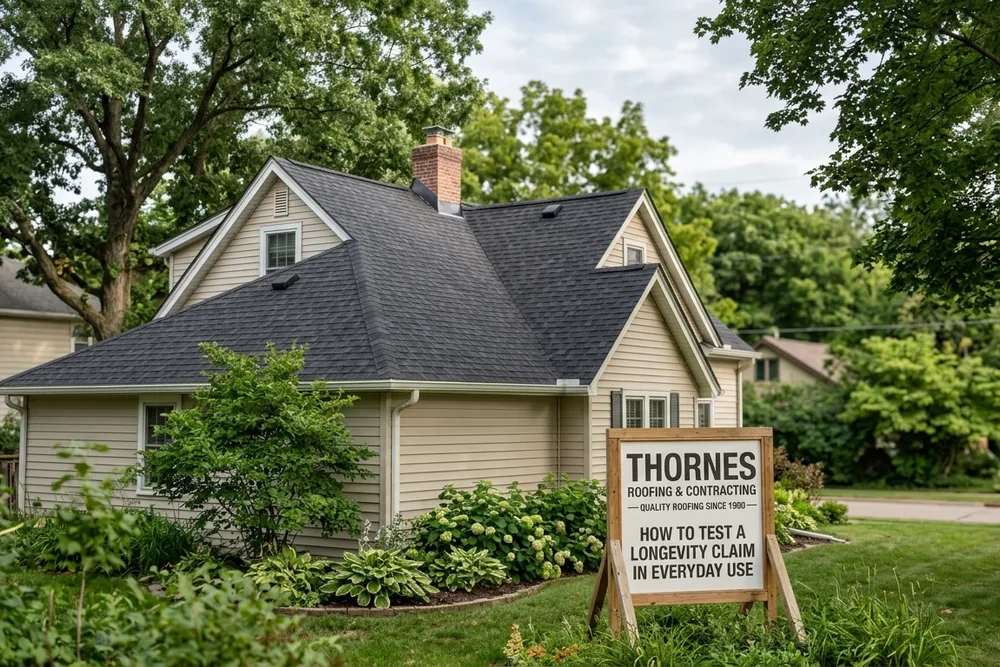
The phrase “a family company serving the triangle area with pride” comes from the site of Thorne Roofing Company, LLC. In North Carolina, “the Triangle” means the Raleigh, Durham and Chapel Hill region, so that company’s service area is nowhere near Canada.
I include it here because the same kind of phrasing appears on almost every small roofer’s site, in every country. “Family owned” and “locally operated” sound reassuring, and they often are. But they’re descriptions, not guarantees. Here’s what to actually look for behind them.
Who answers the phone? A genuine family operation usually has an owner or office manager you can reach directly. If you’re routed to a call centre, the “family” part may be branding.
Who’s on the roof? Ask whether the work is done by the company’s own employees or by subcontractors. Neither is automatically bad, but you need to know. Subcontracted crews should still be covered by the contractor’s insurance and workers’ compensation arrangements, and you should ask to see proof.
How long have the same people been there? Longevity of staff is one of the best predictors of consistent workmanship. A family company that has kept its foremen for ten years is a different proposition from one that churns through temporary crews every season.
Can they show you a recent customer? Pride in a service area should translate into neighbours who’ll vouch for the work. Ask for a couple of recent jobs within your own community.
A Canadian example makes the point. A Calgary roofer who says “serving the community for 25 years” should be able to tell you what the last hailstorm season was like for them, how many claims they handled and how they dealt with the backlog. If the answer is vague, the slogan is doing the work that experience should be doing.
Quality Roofing Since 1990: How to Test a Longevity Claim
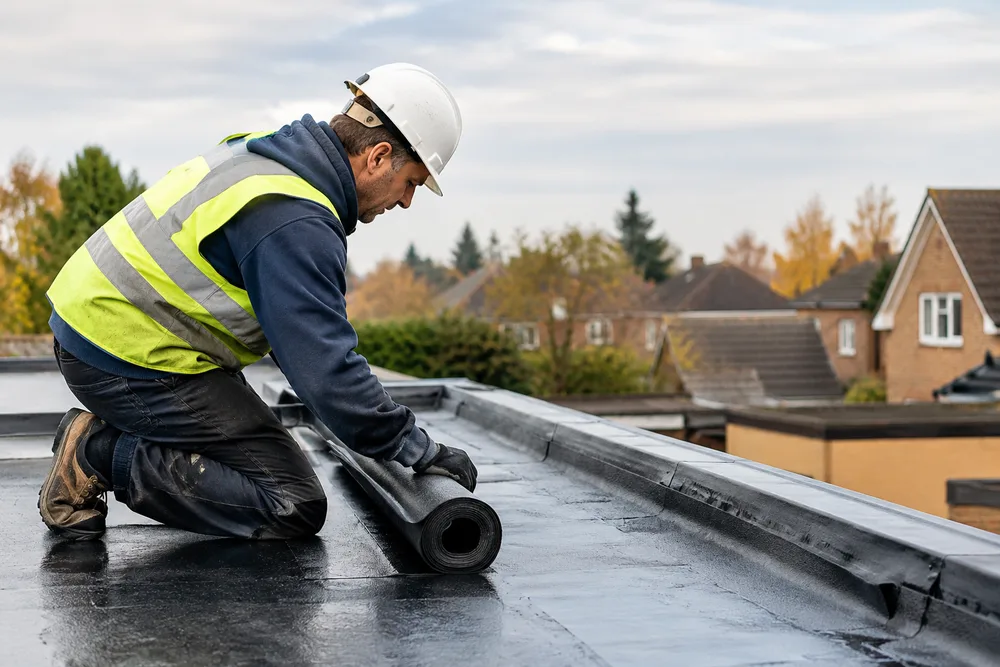
“Quality roofing since 1990” is a strong claim. Thorne Roofing Company, LLC uses it on its site, and many established contractors make similar ones. A long history is a real advantage, because roofing mistakes often take years to show up, and a company that has survived decades has usually fixed its own errors.
But a start date isn’t a quality guarantee. Here’s how to test it.
- Ask for the legal entity’s registration date. Companies change names, merge and restart. A business “operating since 1990” may be a corporation formed in 2012 with an owner who has been roofing for decades. That’s fine, but the warranty is only as good as the entity that issues it.
- Ask about warranty claims. How many callbacks do they get? What happens when a roof they installed in 2008 develops a problem? Honest answers include some examples.
- Ask for old customers. One of the best signals is an older roof that’s still performing. A homeowner on a roofing forum described an asphalt shingle roof done by Huey and Sons that was still leak-free and looking good after 22 years. That’s the kind of long-term outcome you want a contractor to be able to point to, because it tells you something that a five-year-old review can’t.
- Check how they handle repairs on their own old work. A contractor who’ll come back to a 15-year-old roof to fix a flashing problem is worth more than one with a longer list of new installs.
What “22 years leak-free” actually tells you
Asphalt shingles generally last somewhere in the range of 15 to 30 years depending on quality, ventilation, climate and installation. A roof that’s still sound at 22 years is on the good side of average, and it suggests proper underlayment, flashing and ventilation, not just good shingles. In Canada, where freeze-thaw cycles, ice dams and snow loads punish roofs, it’s an even better sign.
Flat Roofing: What Homeowners and Property Managers Get Wrong

Flat roofing is one of the services Thorne Roofing Company, LLC highlights, and it’s also the area where hiring the wrong contractor hurts most. A pitched shingle roof sheds water by gravity. A flat or low-slope roof has to resist it, which makes the details, such as seams, drains, flashings and edges, far more important.
A “flat” roof isn’t actually flat. It should have a slight slope, commonly around a quarter inch per foot (roughly 2 percent), toward drains or scuppers. If it doesn’t, you get ponding water, which shortens the membrane’s life and invites leaks.
Common flat roof systems compared
| System | Typical service life (rough range) | Strengths | Watch out for |
|---|---|---|---|
| Modified bitumen (torch-on or self-adhered) | About 20 to 30 years | Widely used in Canada, tough in cold climates, repairable | Torch application needs a skilled, insured crew because of fire risk |
| EPDM (rubber membrane) | About 20 to 30 years | Flexible in cold, simple repairs | Seam quality matters, punctures from foot traffic |
| TPO or PVC (single-ply, heat-welded) | About 15 to 25 years | Reflective, welded seams, popular for commercial | Quality varies by manufacturer and installer |
| Built-up roofing (tar and gravel layers) | About 20 to 30 years | Redundant layers, long track record | Heavy, messy, fewer installers than before |
These ranges are broad planning figures, not guarantees. Climate, drainage, foot traffic and maintenance can move a roof a decade in either direction.
Questions to ask about any flat roof quote
- What system are you proposing, and why for my building?
- How is the roof insulated, and what’s the plan for the vapour barrier? In Canadian winters, condensation inside a flat roof assembly is a real problem.
- What’s the drainage plan? Are you adding tapered insulation to fix ponding?
- How will you detail the edges, parapets and penetrations?
- Is the warranty from the manufacturer, the installer or both, and what voids it?
A contractor who answers these without hesitation is likely competent. One who says “we just put a new layer over the old one” without checking the deck for moisture is cutting a corner that will cost you later.
Repair or replace?
For a flat roof with one or two leaks, a targeted repair is often a sensible choice. The deciding factors are age, the extent of wet insulation and how many repairs have already been made. An infrared or moisture survey can show how much insulation is saturated without tearing the roof open. If more than a modest portion is wet, replacement usually makes more financial sense than patching.
Welcome to Our Site: How to Read a Roofer’s Website
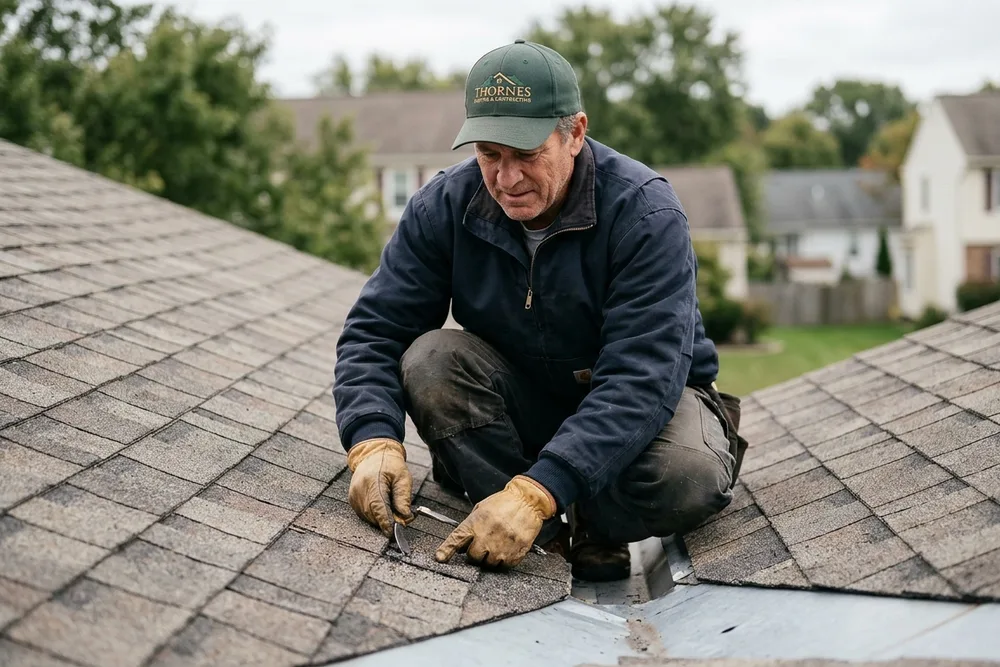
“Welcome to our site” is how many contractor pages open, including the ones that rank for this search. The welcome text is fluff. The real information sits lower down, and you can learn a lot by knowing where to look.
Start with the contact page. A physical address, a local phone number and a named owner or manager are good signs. A form and nothing else is weaker.
Look for specifics about services. The better sites name what they do in plain terms: leak repair, tear-off and replacement, flat roofing, metal roofing, skylights, strata or commercial work. The TNS Contracting site, for instance, lists leak repair, full replacements and strata reroofing, and says it is built for coastal rain. That kind of regional detail suggests a company that actually works in that climate.
Check for licences, insurance and safety information. In Canada, you’d expect to see mention of liability insurance and workers’ compensation coverage. A site that says “licensed and insured” is a start, but you still need to see the certificates.
Look for a recommendation to repair when repair is enough. TNS Contracting’s page says that when a targeted flashing repair can extend a roof’s life, it will recommend the repair. Whether any given company lives up to that is something you test, but a site that mentions it at least frames the relationship correctly. A company that only ever recommends replacement should raise a question.
Beware of generic claims. “Best in town,” “unbeatable prices” and “satisfaction guaranteed” with no terms are filler. A guarantee is only worth what’s written in the contract.
Red flags in website copy
- No address, or an address that turns out to be a mailbox store
- Dozens of cities listed with no evidence of working in them
- Stock photos only
- Pressure language such as “limited time” or “storm special” with no detail
- Reviews that are all posted in the same week
Every Assessment Is Done by a Roofer, Not a Salesperson: Why It Matters
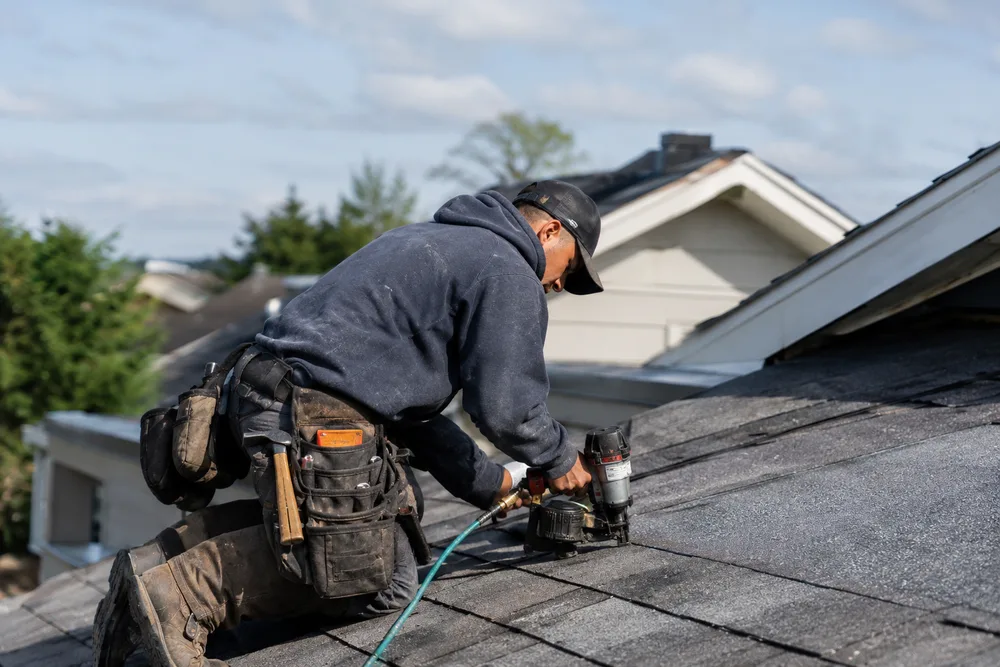
This line from TNS Contracting’s site is worth pausing on, because it names the single biggest structural problem in residential roofing: who actually looks at your roof.
In many roofing companies, the person who comes to your door is a salesperson paid on commission. Their income depends on closing the job at a good price, not on diagnosing the right fix. That doesn’t make them dishonest, and many are knowledgeable. But the incentive points toward replacement and toward higher-margin options.
An assessment by a working roofer, or an estimator who has spent years on roofs, tends to be different. They look at the decking, the flashing, the ventilation and the attic. They can tell you whether you need a repair or a replacement, and they can explain the reasoning.
The commission question, from the other side
A comment from someone in the trade is instructive here. They described being approached by three roofing companies in a few weeks, all trying to recruit them as a salesperson, and laughing when they stated their expected commission rate. You can read that a few ways, but the takeaway for a homeowner is simple: sales compensation in roofing is a major cost driver. It’s built into your quote. A company with a roofer doing the assessments may carry less of that overhead, or at least has a different incentive structure.
What a proper assessment includes
- Exterior inspection. Shingle condition (granule loss, curling, cracking), flashing, sealant, gutters and drip edges.
- Attic inspection. Staining on the underside of the deck, daylight through boards, damp insulation, mould, ventilation and insulation levels.
- Penetrations and transitions. Chimneys, skylights, vents, valleys and wall-to-roof junctions.
- Measurements and layers. How many layers of shingles are on the roof, and what pitch and complexity the roof has.
- A written explanation. Photos of the problem areas, a clear statement of what needs doing now and what can wait.
An honest assessment can also be a short one. One homeowner reported that Bucco’s Roofing came out, gave a candid assessment and told them the roof had a year or two of life left. Nobody pushed an immediate replacement. That kind of answer, which says “you have some time, plan for it,” is the opposite of a pressure sale, and it’s often what builds long-term trust. The homeowner then knows when to budget and who to call.
Thornes Roofing Contracting Reviews: How to Read Them Properly
People searching for thornes roofing contracting reviews are usually trying to answer one question: will this company do what it says? Reviews help, but only if you read them with a method. Below are the patterns that show up repeatedly in homeowner comments about roofers generally. These examples are paraphrased from online posts, they concern other contractors, and I can’t verify them. They’re here because they illustrate what good and bad signals look like.
Patterns that suggest a good contractor
- Honest, specific assessments. The Bucco’s Roofing example above is one: a candid estimate of remaining roof life.
- Fair but not cheapest. One homeowner said Charm City Roofing was easy to work with and not the cheapest, but not a scammer either. That’s a believable review. Real tradespeople who insure their crews, pay proper wages and warranty their work usually can’t be the lowest price.
- Speed with quality. Another reported that All County Exteriors completed their roof in a day and that they couldn’t recommend the company enough. A one-day replacement is realistic for many average-sized homes with a well-organised crew, but verify the claim against roof size and weather.
- Repeat business. Someone who says they’ve had two roofs done by the same contractor, as one homeowner said of Ridge Top Exteriors, has tested the relationship twice.
- Longevity. The 22-year asphalt roof example from Huey and Sons is the best kind of evidence.
- Family-run, long-established. A commenter said you can’t go wrong with Halco Roofing in Burlington, a family business since the 1980s. Local reputation built over decades is hard to fake.
Patterns that suggest trouble
- Action before consent. One homeowner said their roofer tarped the roof before even hearing from their insurance company, without consulting them. Emergency tarping can be legitimate, but doing it without asking, and before you’ve talked to your insurer, is a red flag. More on this below.
- Storm-chaser pressure. Another person warned about roofing companies that show up and assess damage uninvited after a storm. These crews often work on commission and may not be local.
- Inflated quotes. A homeowner reported getting a very high quote from one company and going with Shmucker for roughly half of what TruChoice had asked. The lesson is not that one is good and one is bad. It’s that quote spreads of 50 percent or more happen, and you only see them if you collect several.
- Review suppression. One person said they posted a Google review and then got a call from the owner the same evening asking them to take it down. A company that chases critics instead of fixing problems is telling you how it will treat you after the cheque clears.
- One great story. A review saying someone had a “FANTASTIC experience” with a Boston roofer sounds nice, but a bare superlative with no detail is the weakest kind of evidence.
A quick way to score reviews
| What to check | Strong signal | Weak signal |
|---|---|---|
| Detail | Names the job type, timing and crew | “Great service!” with nothing else |
| Spread over time | Reviews across several years | A burst in one week |
| Negative reviews | A few, with calm, specific owner replies | None at all, or owner arguing |
| Where posted | Google, Facebook and a local directory | Only one site |
| Roof type | Matches your situation (flat, shingle, metal) | Unrelated services |
| Longevity | Mentions how the roof performed years later | Only same-week reactions |
What Should You Do When Insurance Is Involved?
Storm and hail damage is where roofing disputes get ugly, and it’s relevant across Canada, especially on the Prairies and in Ontario and Quebec. The review mentioned earlier, where a contractor tarped a roof before the homeowner had heard anything from their insurer, shows the exact scenario to avoid.
Here’s the sequence that protects you.
- Photograph everything first. Take date-stamped photos of the damage, the interior and any water intrusion.
- Call your insurer or broker before signing anything. Ask what’s covered, what your deductible is and whether emergency mitigation has to be pre-approved.
- Authorise temporary repairs in writing. If water is coming in, tarping or boarding is reasonable. Make sure you agree to it, know the price and keep the invoice.
- Don’t hand over control of the claim. Be cautious about any document that directs insurer payments to the contractor or gives them authority to negotiate for you. Read it carefully, and ask your insurer about it.
- Get at least two written estimates for the permanent repair, even if the insurer has an adjuster’s number.
Many reputable roofers will help with documentation and talk to adjusters, and that’s normal. The difference is that they do it with your knowledge and consent, and they don’t pressure you to sign on the spot.
How Should You Compare Roofing Quotes in Canada?
A quote is not a price. It’s a document that describes what you’ll get, and two quotes with the same total can describe very different jobs. When you’ve got two or three, compare them line by line.
What a complete quote includes
| Item | What to look for |
|---|---|
| Scope | Full tear-off or overlay? How many existing layers are being removed? |
| Materials | Shingle line and manufacturer, underlayment type, ice and water shield locations, ridge vent, flashing metal |
| Decking | Price per sheet for replacing damaged plywood or OSB, stated up front |
| Ventilation | Intake and exhaust plan, not just “vents included” |
| Cleanup | Magnetic nail sweep, dumpster, protection for landscaping |
| Permits | Who pulls them, if your municipality requires one |
| Schedule | Start window, expected duration, weather policy |
| Payment terms | Deposit size, milestone payments, final payment after walk-through |
| Warranty | Manufacturer terms plus the contractor’s workmanship warranty, in writing, with duration |
| Taxes | GST or HST shown separately, so you can compare like with like |
Reasons a quote can be much lower
Sometimes a low quote is legitimately competitive. More often, one of these is behind it.
- Fewer layers removed, or an overlay instead of a tear-off
- Cheaper underlayment, or no ice barrier at eaves and valleys
- No allowance for decking repairs, which then appear as “extras”
- Uninsured crew, or no workers’ compensation coverage
- Reduced ventilation, which shortens shingle life
- Thin or no workmanship warranty
The earlier example of a homeowner choosing a contractor for half the price of another quote shows that big spreads exist. It doesn’t tell you which was right. Ask both contractors to explain the difference, and see who can do so clearly.
Which Roof Material Suits a Canadian Home?
Climate drives the answer. Coastal BC deals with persistent rain and moss, the Prairies deal with hail and wide temperature swings, and Ontario and Quebec deal with ice dams and heavy snow.
| Material | Typical lifespan (rough range) | Relative cost | Canadian considerations |
|---|---|---|---|
| Asphalt shingles (3-tab) | About 15 to 20 years | Lowest | Budget option, less wind and hail resistance |
| Architectural asphalt shingles | About 20 to 30 years | Low to moderate | Most common choice, good balance for most homes |
| Impact-resistant (Class 4) shingles | About 20 to 30 years | Moderate | Worth asking about in hail regions, may lower insurance premiums with some insurers |
| Steel or aluminum standing seam | About 40 to 70 years | Often two to three times asphalt | Sheds snow well, needs snow guards, lasts longest |
| Cedar shakes | About 25 to 35 years | Moderate to high | Needs treatment and maintenance, more at risk in wet coastal areas |
| Flat roof membranes | See the flat roofing table above | Varies | Drainage and insulation detailing are critical |
Treat these as ranges, not promises. A well-ventilated roof with a good installer can beat the typical life, and a poorly ventilated one can fall far short.
Hiring Checklist for Canada
Before you sign, work through this list. It takes about an hour and can save you thousands.
| Check | How to do it |
|---|---|
| Legal name and registration | Search the provincial business registry (for example BC Registry Services, Ontario Business Registry or Alberta’s corporate registry) for the exact name on the quote |
| Workers’ compensation | Ask for a clearance letter from WorkSafeBC, WSIB, Alberta WCB or your provincial board, and confirm it’s current |
| Liability insurance | Request a certificate of insurance, ideally one that lists you as certificate holder, and check the coverage amount and dates |
| Business licence | Many municipalities require one, so check your city’s website |
| Permits | Ask whether your municipality needs a roofing permit, and who will apply |
| References | Ask for two or three recent customers nearby, and one from five or more years ago |
| Written contract | Scope, materials, price, payment schedule, start and finish dates, warranty |
| Manufacturer credentials | If they claim a certified installer status, ask for the program name and verify it with the manufacturer |
| Payment terms | Be wary of large upfront deposits, and avoid paying the full amount in cash before completion |
Rules and bodies differ between provinces, so confirm requirements with your local authorities. If a contractor resists any of these checks, that’s useful information.
Step-by-step: how to hire a roofer without regrets
- Identify the exact company (name, address, phone, domain).
- Verify registration and insurance before the first visit.
- Get two or three written quotes with matching scope.
- Ask who will inspect the roof and what the inspection includes.
- Check recent and older reviews, and call one reference.
- Read the contract, especially the warranty and payment terms.
- Confirm the start date, weather plan and cleanup arrangements.
- Do a walk-through at the end and hold final payment until issues are fixed.
What About Ongoing Roof Maintenance?
A roof is cheaper to maintain than to replace early. A few habits extend its life.
- Inspect twice a year. Spring and fall are sensible, and after any major storm.
- Keep gutters clear. Overflowing gutters push water under the eaves and feed ice dams in winter.
- Trim overhanging branches. They scrape shingles and drop debris.
- Watch the attic. Frost on the underside of the deck in winter, or a musty smell, points to ventilation or air leakage problems.
- Clear heavy snow carefully. Don’t chip at ice on shingles. If snow load is a concern, hire someone with proper fall protection.
- Manage moss on wet coasts. Zinc strips or gentle treatments help. Avoid pressure washing, which strips granules.
- Document repairs. Keep invoices and photos for warranty and resale.
For flat roofs, add drain checks. A blocked drain turns a sound roof into a swimming pool within a single storm.
FAQ
No. The name appears across several unrelated businesses and listings, including a Facebook page, a North Carolina family roofer, and similarly named contractors elsewhere. Confirm the exact legal name, address and phone number on any quote, and check the registry in your own province or state before you hire.
Read reviews on at least two platforms, such as Google and Facebook. Favour detailed ones that mention the job type, timing and crew, and look for reviews from several years back. Pay attention to how the owner responds to complaints. A calm, specific reply is a better sign than a perfect score.
Ask for a current workers’ compensation clearance letter and a certificate of liability insurance, then verify both with the issuer. Check that the business name is registered in your province, and ask your municipality whether a business licence or permit is required. Requirements vary by province and city.
Ideally a roofer or an experienced estimator who has worked on roofs. Commission-based salespeople have an incentive to close a sale, which can lean toward replacement. Whoever visits, ask for photos of problem areas and a written explanation of what needs doing now versus later.
A typical asphalt shingle roof on an average home can often be finished in one to two days with a full crew, weather permitting. Larger or more complex roofs, metal installs and flat roof systems take longer. Ask for a start window and a plan for rain delays.
Call your insurer as soon as possible, photograph the damage and keep every invoice. Emergency tarping is reasonable when water is entering, but you should agree to it first and know the cost. Be careful about signing any document that gives a contractor control of your insurance claim.
Not always, but find out why it’s lower. Compare tear-off scope, underlayment, ventilation, decking allowances, insurance coverage and warranty terms. Quotes can differ by 50 percent or more for the same roof, and the cheaper one often leaves out items the other includes.